
As GCI continues development of the next generation Adaptics® smart torque arm platform, one of the primary goals is making the system easier for clients to set up, operate, and support.
Adaptics® V2 is currently in development and planned for release in Fall 2026. For current Adaptics® smart arm capabilities, visit our Smart Arm Technology page with more details on the current position verification features.
The new platform simplifies everything from initial configuration and operator feedback to hardware and troubleshooting. The result is a smart torque arm system designed to require less specialized knowledge during both installation and everyday use.
What Changes and What Stays the Same
If you’re a current Adaptics® user, you might be wondering what is going to be different between these two versions. Here’s the quick breakdown:
What Changes in V2
- Simplified hardware and web-based interface
- No dedicated monitor required with tool-adjacent LED bar
- Faster routine setup with training mode
- Improved diagnostics
- Open REST API
What Stays the Same
- Position verification to help error proof a process
- Operator guidance
- Tool neutral (ie can be used with almost any torque tool)
- Integration with GCI’s torque reaction systems
- Documentation resources and support from GCi
Simple Setup and Training
Setting up the new Adaptics® platform will start with a straightforward process. After assembling the torque arm, the engineer assigns an IP address to Adaptics®, homes the encoders, and enters training mode. From there, much of the configuration can be completed simply by running the fastening process.
For passive applications, where Adaptics® follows the lead of the tool controller, Adaptics® can learn the fastening routine associated with each job number sent by that controller. The engineer runs the process as it would normally be performed and Adaptics® records the positions associated with the routine.
Active applications require some additional information, such as the number of fasteners in the routine, but the setup process follows the same basic approach.
Training mode also does more than record positions. As the fastening routine is performed multiple times, Adaptics® collects additional positional data and automatically applies corrections to improve accuracy.
After the engineer has performed the routine a few times and verified the process, the smart torque arm can be switched into production mode.
This approach is intended to reduce the amount of manual configuration required when setting up a new fastening process or adding a new job.
Consolidated Hardware and Simple Operator Feedback
The next generation Adaptics® platform also significantly reduces the amount of hardware required to operate the smart torque arm.
The current architecture uses several separate components, including a PC, USB4 module, Anybus communication module, and I/O hardware. The new architecture consolidates these functions into a unified controller built around a microcontroller and embedded web server.
A dedicated monitor is no longer required either.
Because the Adaptics® interface is web based, engineers can access the system by entering its IP address from another device. This could include a computer already located within the work cell or another device connected to the appropriate network.
For operators, most routine feedback can be provided right by the torque tool.
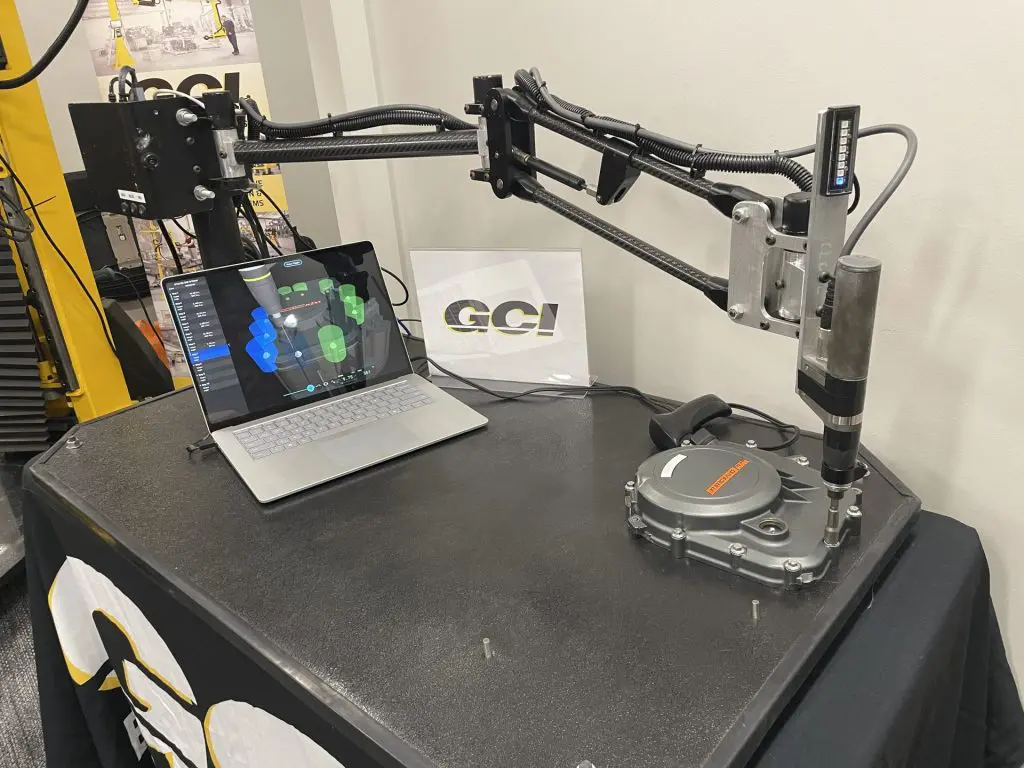
An LED light bar integrated into the remote start handle helps guide the operator to the next fastener and provides simple visual feedback during the fastening process. If there is an issue, the light bar can alert the operator without requiring them to continually look away from the work area at a separate display.
This allows the operator to remain focused on positioning the tool and completing the fastening process.

Easier Diagnostics and System Access
The new Adaptics® interface is also being designed to make system diagnostics easier for engineers and maintenance teams.
A live 3D rendering of the smart arm can display its position and movement in real time. This provides engineers with a visual reference when diagnosing positioning problems, checking encoder data, or verifying how the system is responding.
For normal production, the interface can be simplified. A photo of the assembly with dots identifying each fastening location can provide operators and engineers with an easy way to see the current step and overall progress of the fastening routine.
A continuously updated log screen will provide additional information about the process, including system activity and errors. Rather than troubleshooting from individual components, engineers will have a central location to review what Adaptics® is seeing and how the system is responding.
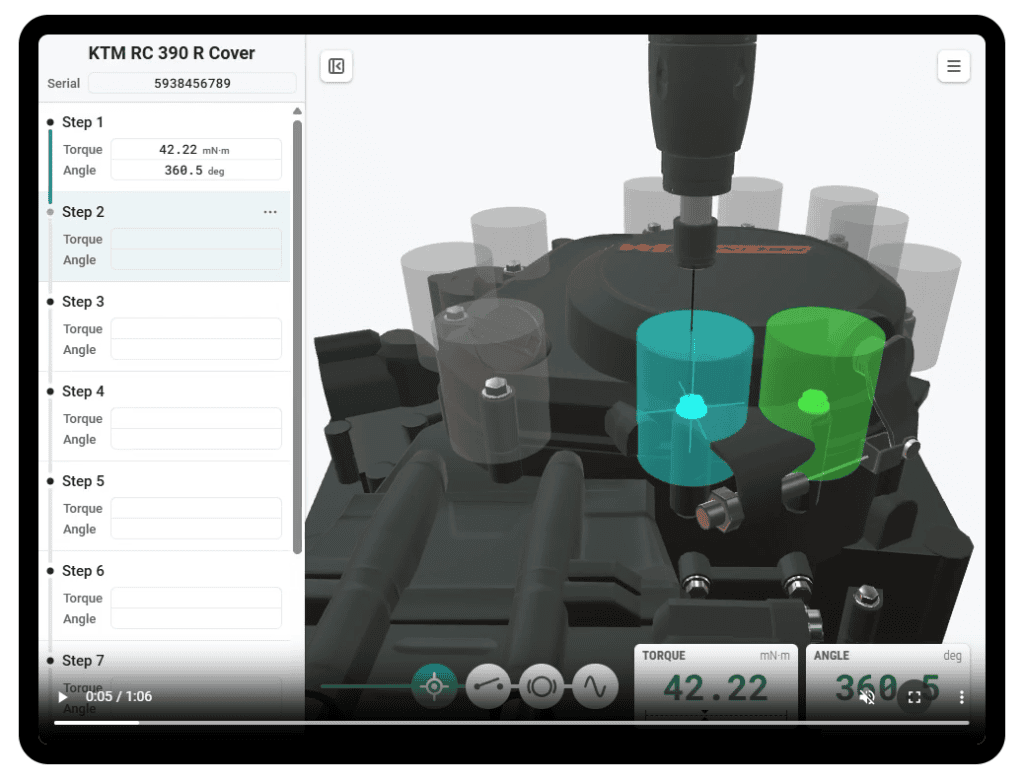
Because the interface is web based, access is not tied to a particular monitor or computer. An engineer can connect to Adaptics® through its IP address from another computer in the work cell or another authorized device on the network.
This also allows the smart torque arm to operate without a dedicated monitor. The LED light bar can provide the operator with the information needed for most production activities, while the full browser interface remains available when additional information or diagnostics are required.
Adaptics® will also include an open REST API, giving clients additional options for connecting the platform with their own software utilities or developing custom interfaces around their specific application.
A Smart Torque Arm That Is Easier to Live With
The goal of the next generation Adaptics® platform is not simply to add more capabilities. It is to make smart torque arm technology easier to implement and easier to support after installation.
Simplified training, consolidated hardware, tool level operator feedback, web based access, and improved diagnostics are all being developed around that goal.
For clients, that means less complexity between installing the smart torque arm and putting it into production, while still providing engineers with the information and flexibility they need when configuring or troubleshooting the system.